
A collaborative game to explore infamous and invisible women from history
For this year’s International Women’s Day, the Beyond Green team tried something different to bring independent and invisible women from history to the fore, so we could explore, understand and discuss their ground breaking achievements despite facing many barriers.
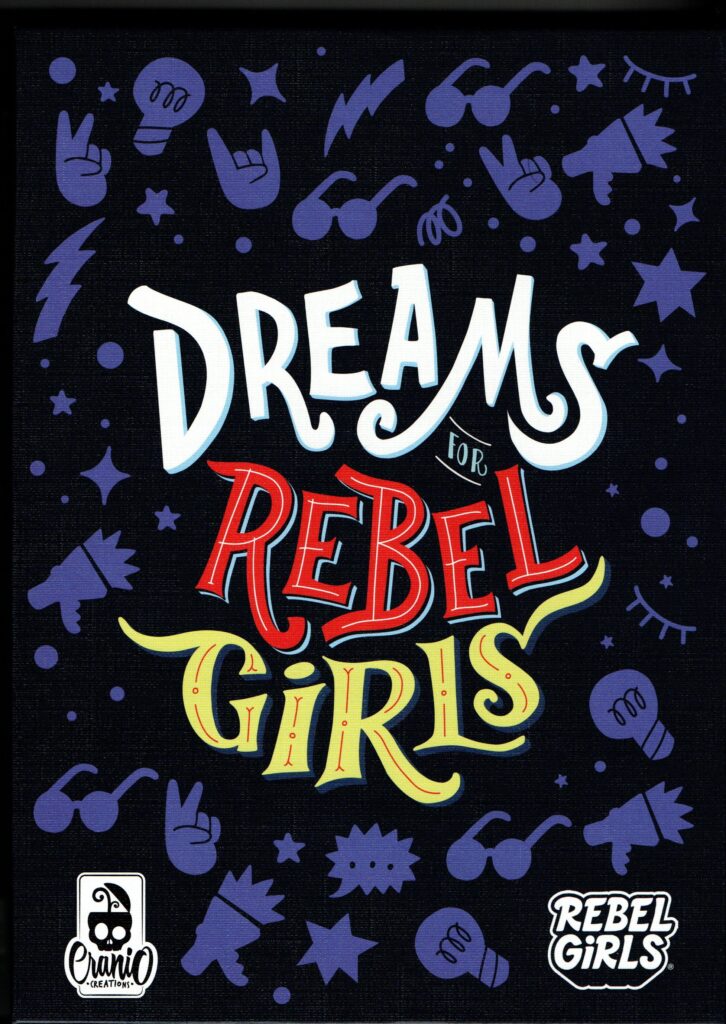
We used a board game called “Dreams for Rebel Girls” (designed by Simone Luciani), which is in turn based on a book series of nighttime stories for children, the first being called “Good Night Stories for Rebel Girls” by Elena Favilli and Francesca Cavallo. Lisa and Evelin adapted the game to play it remotely and in the context of International Women’s Day (IWD), putting more focus on learning about the women in the process of gameplay. You can read more about the background of the game on our LinkedIn Post.
What did we discover?
Well, a lot of unfamiliar stories, from our starting group of eight women spanning different areas of achievement and parts of the world. The women represented different countries, cultures, and ethnicities, and areas of life from politics (Eva Peron), the arts and music (Melba Liston), medicine and science (Maria Montessori & Matilde Montoya), writing (Cora Coralina), Sport (cyclist: Alfonsina Strada), activism (Harriet Tubman) & Political leadership (Lozen).
What they all had in common, is fighting for women’s rights, independence from society’s shackles and more broadly a just society where all are treated with respect. Most of the women were born in the 19th century and early 20th century when their activities would have been generally considered unacceptable. They had to overcome discrimination and derision by their male contemporaries, such as Alfonsina being called the Devil in a Dress because she was a faster cyclist than the male competitors!
They Gave, we Gain
It is because of these women and others that women’s suffrage and rights could develop. For women, especially trans women, there is still a long way to go in terms of equity in law, in business and society. It is not a linear journey, and the progress we have made is not set in stone.
Nevertheless, we can and are building on their foundations and pillars of strength to bring parity. And the work is not down only to women, men are essential allies in breaking down the barriers, speaking out and at the very least have women’s backs in the home, school, workplace and social settings too.
Avoiding IWD Tokenism
Some women feel increasingly disconnected from IWD because there’s a lot of tokenism which diminishes the essence of IWD. And often it’s the women who do the emotional and invisible labour behind the scenes to shout about IWD, with little recognition for their work and often little impact.
It’s why we wanted to try out a different approach in using a game, and why we invited some of our clients into the room. From the conversations about the women in the game, we discovered women that inspired us and importantly strengthened allyship from male colleagues to voice the achievements of past and present women that are making a difference every day.
Here are some of our takeaways:
What I found fantastic was that this is the most I’ve ever heard about IWD not only via work but my friends outside work too. Seems like a positive step to recognising the achievements and impact of many great women and to push for gender equality”
This board game is about Women in history who created space for themselves in worlds dominated by men. I must admit, most of these women were completely new to me. It was a friendly and collaborative space to learn, reflect and celebrate women who have broken boundaries so the rest of us have more opportunities.”
What about next year?
We were joined in this friendly space by Lynsey Mackenzie from J. Smart & Co. (Contractors) PLC and her colleagues where we discussed clues, uncovered the identities of these women, and pieced together their achievements. Maybe next year we can widen our audience and invite more people from our community to join the conversation and discover more courageous women from history.
In preparation, we’d like to share another insightful resource: the book “Women who Dared” edited by Sara Sheridan, which covers over 40 short extracts obtained from the Dangerous Women Project at the University of Edinburgh.